
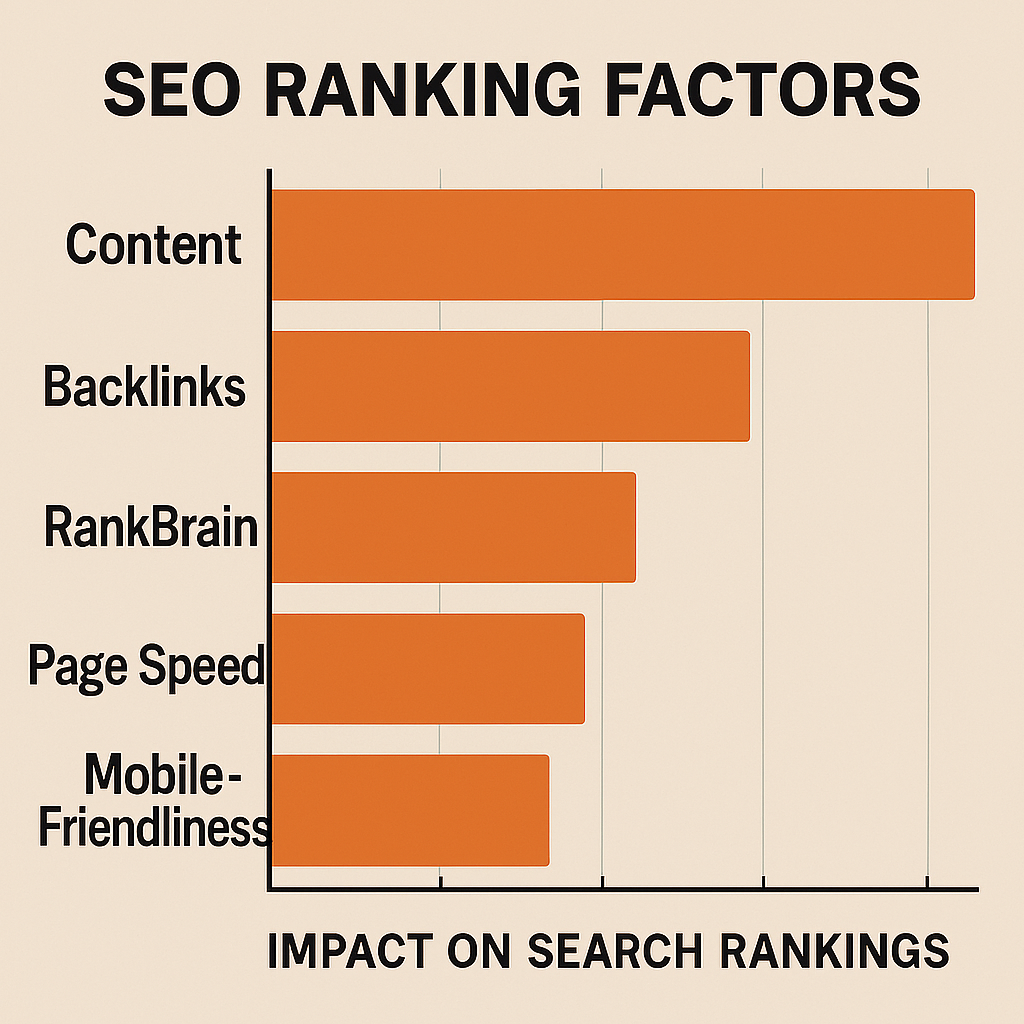
SEO ranking factors are the signals search engines weigh to decide where a page appears in results, spanning content quality, backlinks, mobile-friendliness, and technical health. Google has used variations of this scoring since introducing PageRank in 1998, and Core Web Vitals joined the mix as an official ranking signal in 2021. For geodeck readers, these same fundamentals also shape technical SEO, indexing, and AI visibility work.
Search engine optimization (SEO) is crucial for online visibility. Understanding SEO ranking factors can significantly boost search rankings.
These factors determine how search engines rank your site. They include content quality, backlinks, and mobile-friendliness.
High-quality content is essential. It attracts visitors and keeps them engaged.
Backlinks from authoritative sites enhance credibility. They improve your site's search engine ranking.
Mobile-friendliness is vital in today's digital age. It ensures a smooth user experience across devices.
What Are the Core SEO Ranking Factors?
SEO ranking factors are the foundation of successful website optimization. They directly affect your visibility in search engine results.
Each factor plays a unique role. Some focus on content, others on site performance and security.
Key elements include keyword optimization and technical SEO features. These must work together for effective results.
Consider the following essential aspects:
- Content Quality
- Keyword Optimization
- Page Speed
- Mobile Friendliness
- Secure Connections (HTTPS)
Understanding and optimizing these factors is crucial. It ensures better reach and engagement with your target audience. As Google's own developer guidance puts it, there's no separate trick to chase here, either for classic rankings or AI-generated ones:
"There are no additional requirements to appear in AI Overviews or AI Mode, nor other special optimizations necessary." — Google Search Central

The Periodic Table of SEO Ranking Factors: A Modern Overview
The periodic table of SEO ranking factors is a practical tool for marketers. It categorizes SEO elements into distinct groups.
Each group targets different optimization areas. These include content, HTML, and trust signals. Understanding these helps in creating comprehensive SEO strategies.
The table adapts over time, reflecting algorithm updates. Hence, staying informed ensures effective strategies.
Essential groups include:
- Content
- HTML structure
- User experience
- Link profiles
- Trust indicators
Knowing these categories aids in holistic optimization. It empowers website owners to adapt quickly to changes.
Diagram of a periodic table of SEO factors with labeled sections, by James Toose.
Core On-Page SEO Ranking Factors
On-page SEO is vital for search engine ranking. It involves optimizing the elements within your website. These factors directly affect visibility.
Content remains a top priority. Quality, relevance, and freshness play significant roles. Optimized content attracts and retains visitors.
Heading structure and internal links enhance user experience. They make navigation intuitive.
Meta tags and descriptions influence click-through rates. They summarize your content for search engines and users.
A well-structured URL is crucial. It should be clear and concise, reflecting the content.
Key on-page SEO factors include:
- Quality content
- Meta tags
- URL structure
- Internal linking
- Heading hierarchy
Focusing on these areas boosts user engagement and search rankings.
Illustration of a webpage with highlighted on-page SEO elements, by Hal Gatewood.
Content Quality, Freshness, and Relevance
Quality content is fundamental for SEO. It should be informative and engaging. Freshness of content also matters. Regular updates improve rankings.
Content relevance is vital. It aligns with user intent and interests. This improves satisfaction and lowers bounce rates.
Important content aspects include:
- Informative nature
- Regular updates
- Alignment with user intent
Quality and relevancy are key for successful SEO strategies.
Keyword Optimization and Meta Tags
Keywords guide users to your content. Effective use involves strategic placement. They should be in titles and headings.
Meta tags enhance search visibility. They describe page content succinctly. Relevant tags boost click-through rates and engagements.
Key keyword and meta tag elements include:
- Strategic keyword placement
- Descriptive meta tags
- Optimized titles
These elements help attract the right audience efficiently.
Technical SEO: The Foundation of Search Engine Ranking
Technical SEO underpins search engine visibility. It ensures that search engines crawl and index your site efficiently. Proper technical implementation is crucial for boosting search rankings.
A well-optimized site improves performance metrics. It enhances user experience, which directly affects SEO rankings. Technical aspects like site architecture are key.
Errors or slowdowns impact indexing negatively. Regular audits identify and fix these issues. Improved technical aspects can prevent ranking drops.
Key technical SEO components include:
- Site architecture
- Efficient crawling and indexing
- Regular technical audits
- Error management
A strong technical foundation keeps your site competitive and accessible. Fast, large-scale indexing has its own open protocol now, and it can move well beyond a handful of pages a day:
"You can submit up to 10,000 URLs per post, mixing http and https URLs if needed." — IndexNow documentation
Diagram illustrating technical SEO elements on a webpage, by Pankaj Patel.
Site Speed, Mobile Friendliness, and Security
Site speed affects user satisfaction. Fast-loading pages reduce bounce rates. Mobile-friendliness is equally crucial, given increasing mobile searches.
Security impacts user trust. HTTPS is essential for a secure browsing experience. It also influences SEO rankings.
Important focus areas include:
- Faster loading times
- Mobile-friendly design
- Secure HTTPS protocol
These elements combine to enhance user trust and experience.
Structured Data and Schema Markup
Structured data aids search engines in understanding content. It enhances search results with rich snippets. Implementing schema markup can boost visibility, using the same shared vocabulary search engines agreed on:
"Schema.org provides a collection of shared vocabularies webmasters can use to mark up their pages in ways that can be understood by the major search engines: Google, Microsoft, Yandex and Yahoo!" — schema.org getting started guide
Schema offers various types for different content. Using them correctly is crucial. It also impacts click-through rates positively.
Key structured data points include:
- Rich snippet potential
- Various schema types
- Enhanced search result visibility
These tools make content more informative and appealing in search results.
Off-Page SEO: Building Authority and Trust
Off-page SEO is vital for establishing authority. It involves actions taken outside your website. These actions affect your site's reliability and search position.
Building trust with search engines relies heavily on reputation. A strong online presence helps improve SEO rankings. This includes social proof and online interactions.
Establishing authority takes time and consistency. Focusing on quality over quantity can enhance your site's reputation. Authentic and credible practices are essential.
Key off-page strategies include:
- Building quality backlinks
- Promoting social engagement
- Monitoring online reputation
- Leveraging brand mentions
These strategies foster trust and authority, which are critical for success.
Backlinks and Link Quality
Backlinks serve as endorsements for your site. They influence search engine trust. However, not all backlinks add equal value.
High-quality links from reputable sites are best. Relevance and authority are key. Avoid spammy or low-quality links, which can harm SEO.
Effective backlink practices include:
- Quality over quantity
- Relevance to your niche
- Avoiding link farms
These practices help build a strong backlink profile to boost visibility.
Social Signals and Brand Mentions
Social signals impact SEO indirectly. Engagement through likes and shares signal popularity. While not direct factors, they enhance brand visibility.
Brand mentions boost online reputation. They show credibility and influence search rankings. Positive mentions encourage trust from search engines.
Important social considerations include:
- Audience engagement
- Positive brand mentions
- Influencer collaborations
Leveraging social media effectively enhances your site's authority and trustworthiness.
User Experience and Engagement Metrics
User experience (UX) is crucial for online success. It affects how long visitors stay on your site. An intuitive, fast-loading site encourages longer visits.
Engagement metrics such as bounce rate and dwell time offer insights into user satisfaction. High bounce rates indicate potential issues. Address them to improve user retention.
Improving UX leads to better search rankings. Consider how users navigate your site. Facilitate easy, pleasant browsing experiences.
Key engagement metrics include:
- Bounce rate
- Dwell time
- Click-through rate (CTR)
- Page views per session
These metrics reflect how users interact with your site, indicating areas for improvement.
Image showing a user navigating a website with satisfaction indicators, by Myriam Jessier.
Local SEO and Google My Business Optimization
Local SEO enhances visibility to nearby consumers. Optimize Google My Business to increase local search presence. Ensure all business details are correct and updated.
Include photos and encourage reviews. These elements build local trust and authority. Engage with customer feedback for improved interactions.
Key elements of Google My Business optimization:
- Accurate NAP (Name, Address, Phone number)
- High-quality photos
- Prompt review responses
Employ local keywords in your content. These boost location-based search results, connecting you to a nearby audience.
Image showing a Google My Business dashboard with optimized business details, by henry perks.
SEO Performance Metrics: Measuring and Improving Rankings
Tracking SEO performance metrics offers insight into your strategy's effectiveness. Begin by understanding which metrics matter most. Key metrics help refine techniques and boost success.
Analyze keyword rankings and visibility trends. Monitor changes to measure SEO impact. Use tools like Google Analytics for in-depth insights.
Focus on improving bounce rates and dwell time. These reflect user satisfaction and engagement. Higher engagement often leads to better rankings.
Essential SEO performance metrics include:
- Organic traffic growth
- Conversion rates
- Page load speed
- User engagement metrics
Monitoring these metrics aids continuous improvement. Regular reviews enhance your strategy's ability to compete in evolving landscapes.
Image depicting a graph or chart of SEO performance metrics, by Isaac Smith.
Actionable SEO Optimization Tips to Boost Search Rankings
Improving search rankings involves strategic actions and practical SEO optimization tips. Start by focusing on high-quality, relevant content that answers user queries. This attracts more visitors.
Enhance site navigation to improve user experience. Clear pathways help retain visitors and reduce bounce rates. Efficient navigation leads to longer site visits.
Utilize keyword research tools for better targeting. Understand trending searches and tailor content accordingly. This aligns content with audience interests.
Consider these optimization tips:
- Optimize site speed
- Regularly update content
- Improve mobile responsiveness
- Leverage social media platforms
Employ these strategies regularly for sustained success. Consistent effort makes a marked difference in search rankings.
Geodeck can help keep that work moving by monitoring indexation, sitemap changes, and technical visibility signals after optimization.
Image illustrating an upward trend in SEO rankings or optimization tips, by Sumaid pal Singh Bakshi.
How Have SEO Ranking Factors Evolved Since 2014?
SEO has changed over the years; comparing SEO ranking factors 2014 with SEO ranking factors 2018 highlights how priorities evolved. In 2014, keyword stuffing still lingered. Gradually, quality content became the focus.
By 2018, mobile-first indexing emerged as a key trend. Websites optimized for mobile gained preference. User experience took the spotlight.
Today, there's more emphasis on user intent and voice search. Algorithms are smarter in understanding context. Key focus areas now include:
- User experience
- Mobile optimization
- Content relevance
SEO continues to adapt, demanding constant learning.
Timeline illustrating the evolution of SEO ranking factors from 2014 to present, by Growtika.
Conclusion: A Holistic Approach to Improve SEO Rankings
Improving search rankings demands a balanced strategy. Combining on-page, technical, and off-page SEO is crucial. Understanding audience needs is vital.
Adapting to changing algorithms helps maintain visibility. Focus on creating valuable content and enhancing user experience. A well-rounded SEO strategy leads to long-term success, one that draws on the same fundamentals covered in Wikipedia's overview of search engine optimization and Google's own SEO starter guide.
Q&A
What Should I Prioritize First to Improve My Site's Search Rankings?
Start with the fundamentals: ensure strong technical SEO (fast page speed, mobile-friendliness, secure HTTPS), then focus on high-quality, relevant, and regularly updated content, followed by smart on-page optimization (clear URL structure, helpful meta tags, logical heading hierarchy, and internal linking). Once the foundation is solid, build authority with quality backlinks and trust signals. This sequence aligns technical accessibility with user value and credibility for sustained gains.
How Should I Use Keywords and Meta Tags Without Hurting UX or Rankings?
Place primary keywords naturally in page titles and headings, and use descriptive, concise meta tags that reflect the page's content and user intent. Avoid keyword stuffing, relevance and clarity matter most. Keep titles optimized, ensure meta descriptions encourage clicks, and update content to stay fresh and aligned with searcher needs.
What Makes a Backlink "High-Quality," and How Do They Affect Rankings?
High-quality backlinks come from authoritative, reputable sites that are relevant to your niche. They act as endorsements, strengthening your site's credibility and improving rankings. Focus on quality over quantity, avoid spammy sources or link farms, and cultivate links through valuable content, brand mentions, and authentic outreach and engagement.
Why Are Site Speed, Mobile-Friendliness, and HTTPS So Important?
They directly impact user experience and trust, fast-loading pages reduce bounce rates, mobile-friendly design serves the growing share of mobile searches, and HTTPS secures user data and boosts credibility. Together, these technical factors help search engines crawl and index efficiently while signaling a reliable, user-first site.
How Do I Measure SEO Performance and Know if My Strategy Is Working?
Track a mix of visibility and engagement metrics, then iterate. Monitor keyword rankings and organic traffic, watch conversion rates, and assess page load speed. Evaluate engagement signals like bounce rate, dwell time, CTR, and page views per session. Use analytics tools to spot trends, run regular reviews, and refine tactics based on what improves user satisfaction and visibility.